Why Goat Milk
Long before Naked Goat became a fragrance and body care studio, there was soap.
Goat milk soap, specifically.
It has been part of what I make since the beginning, and even as Naked Goat has grown to include perfume, body oils, candles and other ways of experiencing scent, I’ve never felt the need to move away from it.
There are certainly easier ways to make soap.
I just don’t think they make my soap.
WHY GOAT MILK?
When I formulate soap, I’m thinking about much more than whether it gets you clean.
I care about how the bar feels in your hands. How easily the lather builds. The texture of that lather against the skin. How the soap rinses. And, perhaps most importantly, how your skin feels afterward.
Goat milk contributes beautifully to that experience.
It naturally contains fats, proteins and sugars that become part of the soap-making process. Those components help create the dense, creamy lather I want from a Naked Goat bar and contribute to the rich feel that distinguishes milk soap from a more basic bar.
For me, that difference is something you can feel.
IT'S ABOUT THE LATHER
I have always been particular about lather.
There is cleansing, and then there is the experience of cleansing. I want both.
A good bar of soap should come alive when it meets water. It should build easily in the hands, feel substantial rather than thin and give you enough time to actually enjoy using it.
The natural sugars in goat milk contribute to lather, while its fat content helps give that lather a creamy, cushioned quality.
It's one of the reasons I've continued working with goat milk year after year.
I simply love the soap it helps me make.
THE OILS MATTER, TOO
Of course, goat milk is only part of the formula.
A beautiful bar of soap comes from the entire composition.
The oils and butters I choose determine so much of the finished bar: hardness, cleansing, conditioning, longevity and the character of the lather itself.
Goat milk becomes another piece of that formulation.
I don't think of it as a magic ingredient. I think of it as a very good ingredient used intentionally alongside everything else in the recipe.
And that distinction matters to me.
WHAT DOES GOAT MILK SOAP FEEL LIKE?
Creamy is probably the word I come back to most.
Once water meets the bar, the lather develops into something dense and silky with a softness that feels particularly lovely on the skin.
It cleans well, but I formulate my bars with the experience after rinsing in mind, too.
I don't want that aggressively squeaky, stripped feeling that can sometimes follow cleansing. I want clean skin that still feels comfortable.
That balance has always been one of the things I love most about making soap.
WHY NOT JUST USE WATER?
You absolutely can.
In traditional soapmaking, the liquid portion of a formula is there primarily to dissolve the lye before it reacts with the oils through saponification. Water does that job perfectly well.
Replacing some or all of that water with goat milk makes the process a little more demanding.
Milk contains sugars, proteins and fats that respond to heat differently than water does. Temperature matters. Technique matters. You have to pay attention.
After more than a decade of making soap, I still think it's worth it.
Not because goat milk sounds lovely on a label, but because I know what it contributes to the bar in my hands.
THE SOAP THAT STARTED NAKED GOAT
There is something else that keeps goat milk particularly close to my heart.
It's part of where Naked Goat began.
Over the years, I've followed my curiosity into fragrance, perfume, candles, body oils and formulas I couldn't have imagined making when I poured my earliest batches of soap.
The studio has changed.
My skills have changed.
My ideas about what Naked Goat can be have changed.
But I still make soap.
There is something wonderfully grounding about returning to the process that started all of this: oils, goat milk, lye, fragrance and time, transformed into something useful and beautiful.
Maybe that's why goat milk has never felt like an ingredient I needed to replace.
It's part of the language of Naked Goat.
MADE THE SLOW WAY
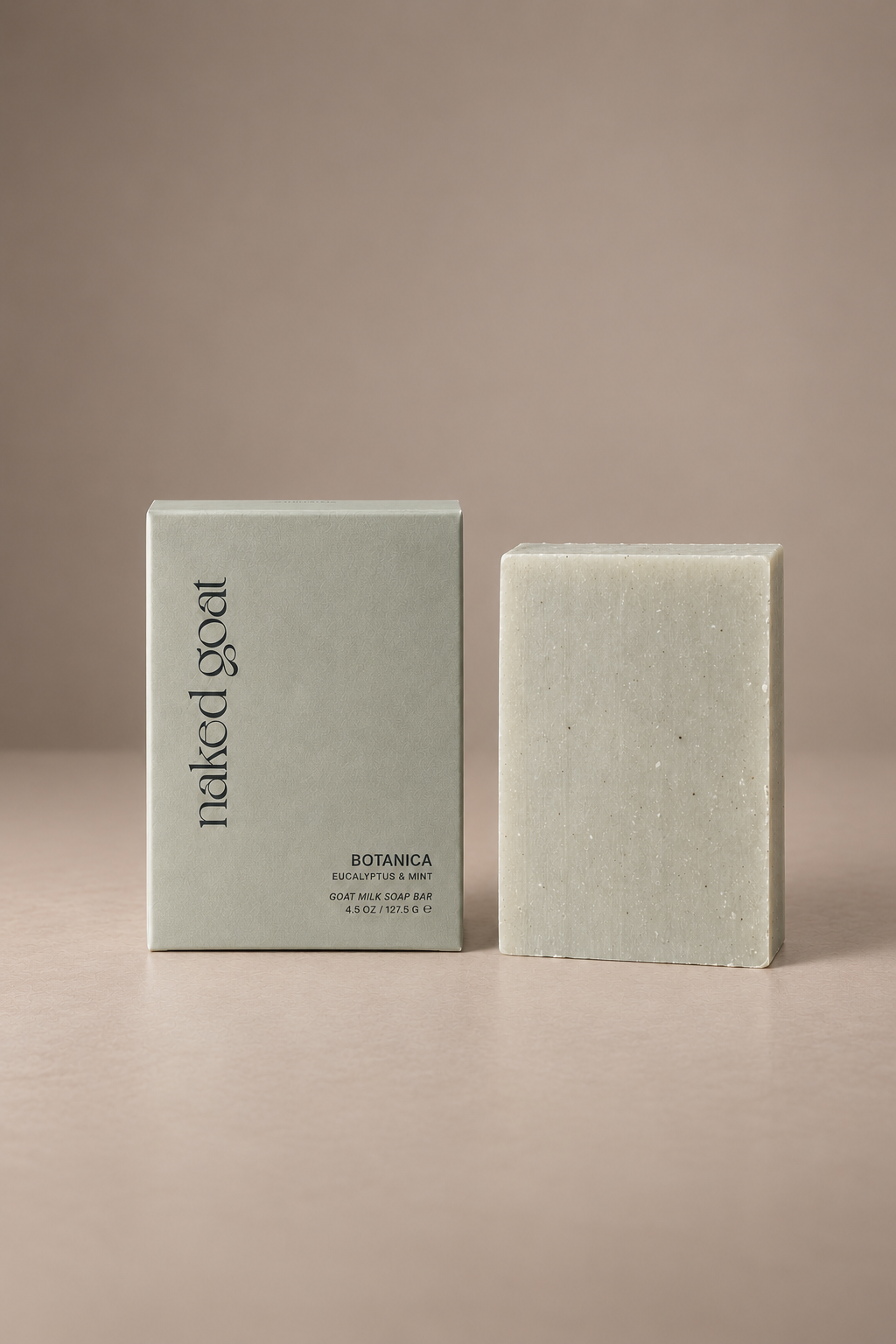
Every Naked Goat goat milk soap is made in small batches using the traditional cold-process method.
After the soap is poured and cut, the bars are given time to cure before they're ready to leave the studio.
There are faster ways to put a bar of soap on a shelf.
But after all these years, I'm still much more interested in making the kind of soap I want to use.
Creamy lather. Beautiful fragrance. A thoughtful formula.
And goat milk.
Some things are worth keeping.
MILK. SKIN. SCENT.
EXPLORE GOAT MILK SOAP

Written by Heather Long